
Healthcare workers practicing in Georgia face a medical malpractice environment shaped by state-specific laws, coverage expectations, and rising claim costs. Whether you are a physician, nurse practitioner, PA, dentist, or allied healthcare professional, understanding Georgia medical malpractice insurance in 2026 is essential to protecting your license, income, and long-term career.
This guide explains how medical malpractice insurance works in Georgia, current legal requirements, typical coverage limits, realistic premium ranges, and how claims-made policies and tail coverage apply in the state.
Quick Summary
- Georgia does not mandate malpractice insurance by statute, but coverage is effectively required
- Hospitals, employers, and contracts set minimum insurance limits
- Most Georgia policies are claims-made, not occurrence
- Tail coverage is a major cost consideration when changing jobs or retiring
- Premiums vary widely by specialty and location
- Working with a Georgia-focused consultant matters
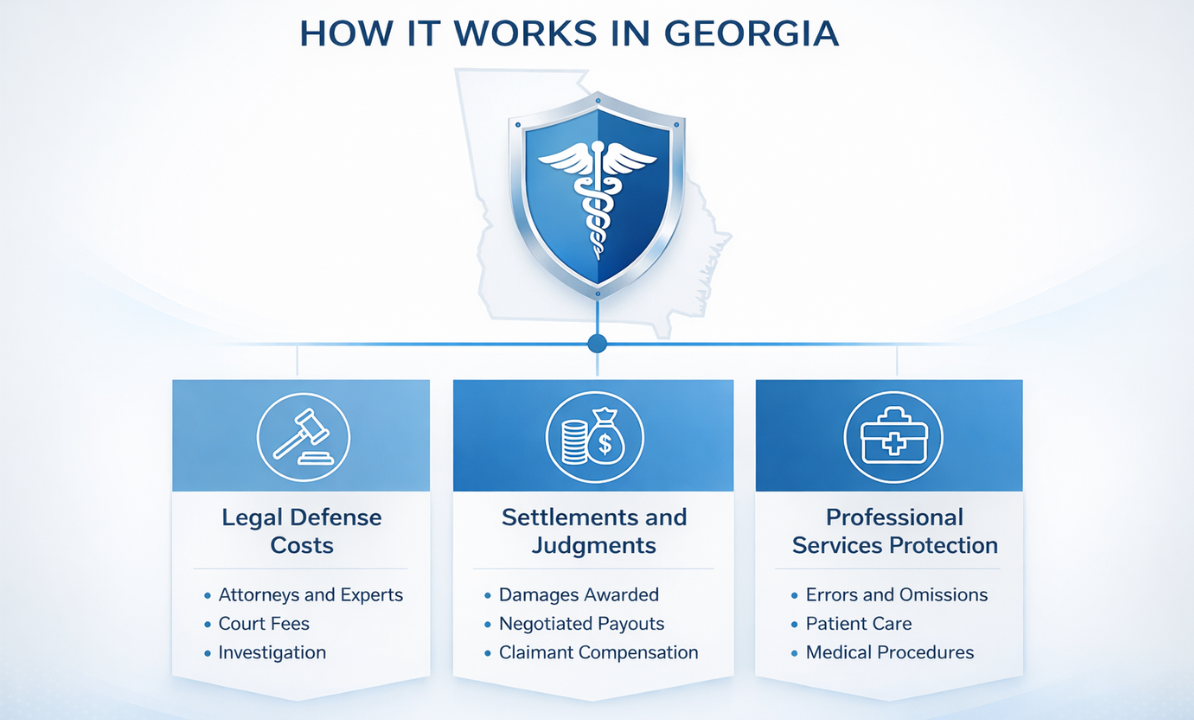
How Medical Malpractice Insurance Works in Georgia
Medical malpractice insurance in Georgia protects healthcare professionals against claims alleging negligence, errors, or omissions in the care of patients.
Coverage typically includes:
- Legal defense costs
- Settlements or judgments
- Coverage for covered professional services
While Georgia law does not explicitly require all healthcare workers to carry malpractice insurance, most professionals are required to have it by their employers, hospitals, or contracts.
For a broader explanation of coverage structures, policy types, and how malpractice protection works across different states, review this guide to medical malpractice insurance 101.
Georgia Malpractice Insurance Requirements
Georgia has no universal statutory minimum coverage requirement. However, in practice:
- Hospitals typically require $1M / $3M limits
- Employers often specify minimum coverage in employment contracts
- Credentialing bodies may require proof of active coverage
- Group practices almost always mandate coverage
For many healthcare professionals, employer and hospital contract requirements effectively make malpractice insurance mandatory, even if state law does not.
If you are comparing how malpractice environments differ across states, reviewing the Florida Medical Malpractice Insurance Guide for 2026 can provide a useful perspective on how the regulatory climate and underwriting trends vary regionally.
Georgia Medical Malpractice Coverage Limits Explained
Coverage limits in Georgia are usually written as:
Per-claim limit / Aggregate limit
Common examples include:
- $500,000 / $1,500,000
- $1,000,000 / $3,000,000
- Higher limits for surgical and procedural specialties
Why Aggregate Limits Matter in Georgia
Georgia does not cap total malpractice damages statewide. While non-economic damage caps were ruled unconstitutional, claims can still be significant, especially in high-severity cases.
Multiple claims in a single policy year can exhaust the aggregate limit, leaving later claims uncovered. This makes aggregate limits particularly important for high-volume or procedural healthcare workers.

Claims-Made vs Occurrence Malpractice Insurance in Georgia
Claims-Made Policies (Most Common in Georgia)
- Cover claims only if the policy is active when the claim is filed
- Lower premiums in early years
- Required to purchase tail coverage when the policy ends
Occurrence Policies
- Cover claims based on when care occurred
- No tail coverage required
- Higher annual premiums
- Less commonly available in Georgia
For most healthcare workers, the choice is not optional. Claims-made policies dominate the Georgia market.
If you want a broader comparison of how claims-made and occurrence structures differ in real-world practice settings, especially for larger physician groups, this guide on claims-made vs occurrence malpractice insurance offers additional practical insight.
Georgia Medical Malpractice Tail Coverage
Tail coverage is critical in Georgia because most policies are claims-made.
You typically need Georgia medical malpractice tail coverage when:
- Changing employers
- Retiring
- Switching insurance carriers
- Leaving a group practice
Without tail coverage, claims filed after your policy ends are uninsured, even if the care occurred years earlier.
How Much Is Medical Malpractice Insurance in Georgia?
Premiums vary significantly based on specialty, experience, and geography.
Approximate Annual Premium Ranges in Georgia
Low-risk specialties (example ranges):
- $3,000 to $7,000 per year
Moderate-risk specialties:
- $8,000 to $15,000 per year
High-risk specialties (surgery, OB-related care):
- $20,000 to $40,000+ per year
These are general ranges, not guarantees. Individual underwriting factors can significantly affect pricing.
To get a more personalized estimate based on your specialty and risk profile, you can use our malpractice premium calculator to model potential costs before requesting formal quotes.

How Much Does Tail Coverage Cost in Georgia?
Tail coverage in Georgia typically costs:
- 150% to 250% of the final annual premium
Example:
- Annual premium: $12,000
- Estimated tail cost: $18,000 to $30,000 (one-time payment)
Some employers agree to cover this cost, but many contracts place the responsibility on the healthcare worker. This is one of the most common financial surprises during job transitions.
To estimate your potential exposure based on your specialty and current premium, you can use our tail coverage calculator to model realistic cost scenarios before making a transition decision.
Common Mistakes Georgia Healthcare Workers Make
- Assuming malpractice insurance is optional in Georgia
- Not reviewing the employer contract insurance clauses
- Ignoring aggregate limits
- Underestimating tail coverage costs
- Waiting until after resignation to explore tail options
These mistakes often surface years later, when there is no opportunity to correct them.
Why Local Expertise Matters in Georgia
Georgia malpractice insurance is shaped by:
- State court trends
- Regional underwriting preferences
- Specialty-specific risk appetite
- Carrier availability within Georgia
This is why many healthcare professionals work with specialists like PLI Consultants. PLI Consultants helps Georgia-based healthcare workers compare A-rated carriers, evaluate coverage structure, and plan proactively for tail exposure rather than reacting after the fact.
A Strategic Approach to Georgia Medical Malpractice Insurance
Georgia medical malpractice insurance decisions should not be made in isolation or at the last minute. Coverage limits, deductibles, policy type, and tail obligations all interact in ways that can impact you years later.
PLI Consultants works with Georgia healthcare professionals to:
- Compare malpractice insurance options from A-rated carriers
- Evaluate coverage limits and policy structure
- Identify and reduce tail coverage exposure
- Support job changes, contract negotiations, and retirement planning
If you want a clear, no-pressure review of your Georgia malpractice insurance or are planning a transition in 2026, a conversation with PLI Consultants can help you make informed decisions before deadlines and costs escalate.