Healthcare workers often carry malpractice insurance for years without realizing that the most important protection may be needed after a policy ends. This is especially true with claims-made malpractice insurance, where coverage does not automatically follow you once you change jobs, retire, or switch carriers.
This guide explains how tail coverage works, why it is required in a claims-made malpractice policy, how much it typically costs, and how to avoid common and expensive mistakes.


Quick Summary
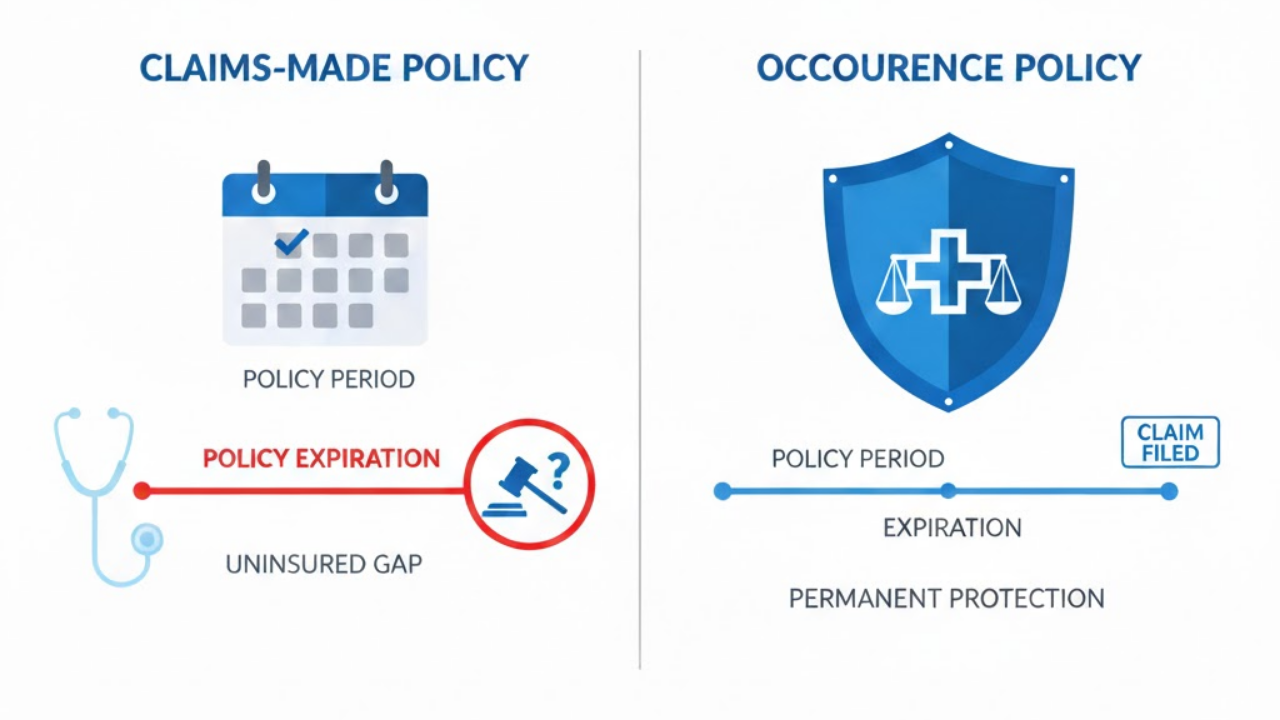
- Claims-made policies only cover claims filed while the policy is active
- Once a claims-made policy ends, coverage stops unless tail coverage is in place
- Tail coverage allows claims to be reported after the policy ends
- Occurrence policies do not require tail coverage
- Tail coverage cost is often a multiple of your annual premium
- Planning early can significantly reduce tail exposure
What Is Tail Coverage on a Claims-Made Policy?
Tail coverage, also known as an extended reporting period, allows you to report claims after a claims-made malpractice policy has ended, provided the incident occurred while the policy was active. In simple terms:- The care happened in the past
- The claim is filed in the future
- Tail coverage bridges the gap
Does a Claims-Made Policy Need Tail Coverage?
In most cases, yes. A claims-made policy needs tail coverage when:- You leave an employer that provided claims-made coverage
- You retire from clinical practice
- You switch insurance carriers
- Your policy is canceled or non-renewed
How Tail Coverage Works in a Claims-Made Malpractice Policy
To understand how tail coverage works, you must first understand the trigger of a claims-made policy. A claims-made malpractice policy requires:- The incident occurred after the retroactive date
- The claim is filed while the policy is active
Claims-Made With Tail Coverage vs Occurrence Policy
Claims-Made Policy With Tail Coverage
- Lower premiums in early years
- Tail coverage is required when the policy ends
- The total lifetime cost can be higher if the tail is not planned for
Occurrence Policy
- Higher annual premiums
- No tail coverage required
- Coverage is permanent for each policy year
Buying Tail Coverage After a Claims-Made Policy Ends
Tail coverage is typically purchased:- From the original insurer
- As a one-time, non-cancelable policy
- Within a limited time window after termination
How Much Does Tail Coverage Cost?
Tail coverage cost is one of the most common surprises healthcare workers face. In most cases, tail coverage costs:- 150% to 250% of the final annual premium
- Annual premium: $20,000
- Estimated tail cost: $30,000 to $50,000
Common Tail Coverage Mistakes
Healthcare workers most often run into trouble by:- Assuming the employer pays for tail coverage
- Confusing tail coverage with occurrence coverage
- Waiting until after leaving a job to evaluate options
- Not understanding contract language around insurance obligations
How Tail Coverage Fits Into a Long-Term Insurance Strategy
Tail coverage should never be treated as a last-minute add-on. It should be part of a broader malpractice insurance strategy that considers:- Career stage
- Job mobility
- Retirement plans
- Risk tolerance
- Policy structure