
Medical malpractice insurance premiums are continuing to rise for many physicians in 2026. The increase is not caused by one issue, and it does not affect every specialty or state equally.
Insurers are responding to larger claim payments, rising legal expenses, unpredictable jury awards, inflation, and changes in state liability environments. Even physicians with clean claims histories may receive higher renewal quotes when a carrier adjusts rates for an entire specialty or geographic area.
Understanding these pressures can help physicians compare renewal terms and avoid choosing coverage based only on price. PLI Consultants helps healthcare professionals review policy options based on their specialty, location, practice structure, and coverage needs.
Medical Malpractice Premiums Are Still Trending Upward
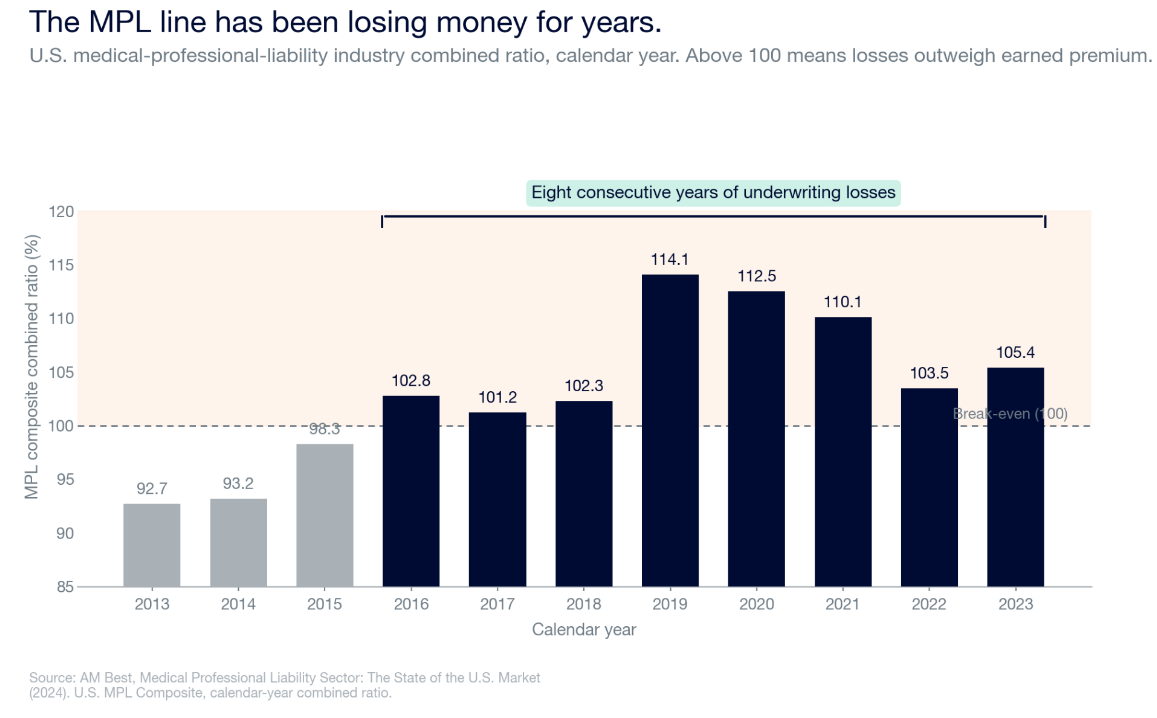
The rising severity of medical malpractice verdicts and settlements is a major factor driving higher insurance premiums. While the overall number of claims has not increased at the same pace, the dollar amounts associated with the largest paid claims and jury awards have climbed significantly. Insurers price policies based largely on the potential cost of future losses, which makes claim severity a critical concern.
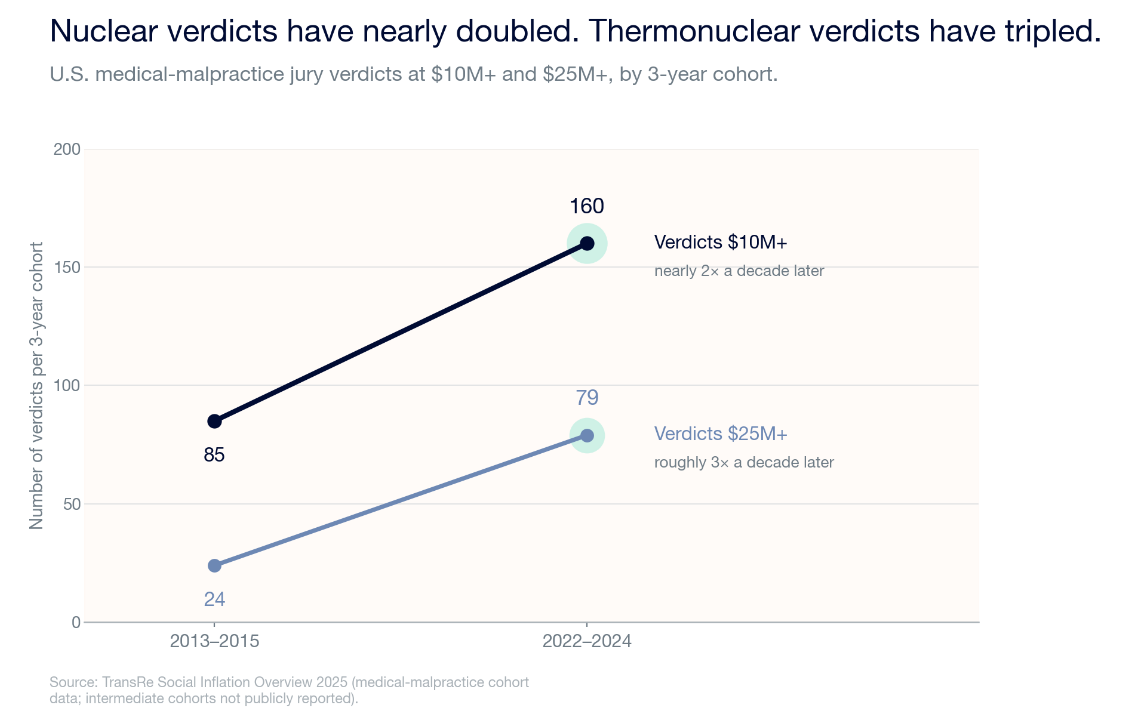
According to TransRe, one of the largest reinsurers in the medical professional liability market, the number of jury verdicts valued at $10 million or more nearly doubled between 2013 to 2015 and 2022 to 2024. Verdicts of $25 million or more increased by more than three times during the same period.
Although these verdicts may not be paid immediately, insurers must account for them when estimating future liabilities and setting loss reserves. As a result, the impact of today’s large verdicts can appear in carrier rate filings and physician premiums well before the claims are fully resolved.
Serious Claims Are Costing More
Claim frequency refers to how often malpractice claims are filed. Claim severity refers to how much an insurer spends through settlements, judgments, legal fees, expert witnesses, and related expenses.
A market can experience fewer claims while becoming more expensive if the remaining claims cost substantially more.
This helps explain why premiums can increase even though the percentage of physicians reporting a recent lawsuit has declined.
Severe injury claims may include future medical treatment, rehabilitation, lost income, home modifications, and long-term support.
When these projected expenses increase, the potential value of a malpractice claim also rises.
Insurers must price policies today for claims that may remain open for several years. Rising claim severity therefore has a direct effect on current premiums.
Large Jury Awards Are Increasing Uncertainty
Insurers are also concerned about the growing size and unpredictability of jury awards.
The term social inflation describes liability claim costs that rise faster than ordinary economic inflation. It can be influenced by changing jury attitudes, aggressive litigation strategies, expanded theories of liability, and a greater willingness to award large noneconomic or punitive damages.
A small number of multimillion-dollar verdicts can affect pricing across an entire specialty or state. These outcomes make future losses harder for insurers to estimate.
When uncertainty increases, carriers may raise premiums, tighten underwriting requirements, reduce available limits, or become more selective about the physicians and facilities they insure.
Legal Defense Costs Continue to Rise
A malpractice claim can be expensive even when the physician is not found liable.
Insurers may have to pay for defense attorneys, medical experts, depositions, medical record reviews, court filings, discovery, and trial preparation. Complex cases can remain open for years and may require several experts from highly specialized medical fields.
Attorney rates and expert witness fees have increased. Electronic health records and other digital evidence can also make discovery more complicated and time consuming.
Because defense expenses are an important part of medical malpractice coverage, higher legal costs eventually affect the premiums insurers charge.
Physicians should check whether defense costs are paid inside or outside their policy limits. When defense expenses reduce the amount available for a settlement or judgment, the policy may provide less practical protection than its stated limit suggests.
Inflation Is Raising the Value of Damages
General inflation affects malpractice claims through the rising cost of medical treatment, nursing care, rehabilitation, medications, assistive equipment, and long-term support.
Wage growth can also increase claims involving lost income and reduced future earning capacity.
These expenses are especially important in cases involving permanent disability, birth injury, neurological damage, or younger patients who may require decades of care.
A claim arising today may not be resolved for several years. Insurers must estimate what future treatment and support will cost when the case is settled, not simply what those services cost when the incident occurred.
This extended timeline makes medical malpractice insurance particularly sensitive to inflation.
Malpractice Claims Develop Over Many Years
Medical malpractice is considered a long-tail line of insurance because claims can take years to be reported and resolved.
A patient may not immediately recognize an injury. Filing deadlines may also be extended in cases involving minors or injuries discovered later. Once a claim is filed, litigation and settlement negotiations can continue for several more years.
Insurers maintain financial reserves for open claims, expected claims, and incidents that have occurred but have not yet been reported.
If new information suggests that older claims will cost more than originally estimated, carriers may need to increase those reserves. This can affect current premiums because insurers must collect enough money to support both new exposure and losses developing from previous policy years.
This is why physicians may receive higher premiums even when their personal claims history has not changed.
State Laws and Local Courts Affect Pricing
Medical malpractice insurance premiums vary widely by state and sometimes by county.
Insurers consider local claim history, jury verdict patterns, court procedures, statutes of limitation, and rules governing noneconomic damages. Changes to state liability laws can make future losses more or less predictable.
Damage caps and other liability reforms may contribute to pricing stability, but no single law determines the final premium. Courts may overturn existing reforms, lawmakers may revise damage limits, and inflation adjustments may increase existing caps.
Local conditions matter because insurers use the claims experience of the areas where they operate. Two physicians with the same specialty and policy limits can therefore receive very different quotes in different states.
High Risk Specialties Face Greater Pressure
Specialty remains one of the strongest factors affecting medical malpractice insurance rates.
Obstetricians, general surgeons, neurosurgeons, orthopedic surgeons, emergency physicians, and other procedural specialists often pay higher premiums because their claims may involve severe or permanent injuries.
Insurers may also evaluate:
- Number of patients treated
- Types of procedures performed
- Hospital privileges
- Use of physician assistants or nurse practitioners
- Telemedicine activity
- Previous claims
- Changes in the physician’s scope of practice
Physicians should confirm that their insurance application accurately reflects their current work. An outdated specialty classification or incorrect procedure profile can produce an unnecessarily high premium or create coverage problems during a claim.
How Can Physicians Respond to Higher Premiums?
Physicians cannot control jury trends, inflation, or statewide market conditions. They can, however, improve how their coverage is structured and presented to insurers.
Review the renewal application carefully. Confirm that work hours, practice locations, patient volume, procedures, and ownership information are accurate.
Physicians should also ask about available credits for:
- Part-time practice
- Risk management training
- Board certification
- A clean claims history
- New physician status
- Reduced patient volume
Comparisons should include more than the annual premium. Important policy terms include:
- Occurrence versus claims-made coverage
- Retroactive dates and prior acts protection
- Tail coverage obligations
- Consent to settle provisions
- Defense costs inside or outside policy limits
- Policy exclusions
- Carrier financial strength
- Claims handling support
PLI Consultants can compare options from multiple carriers and identify differences that may not be obvious from the quoted premium alone.
Changing insurers may reduce the current rate, but it should not create a gap in prior acts coverage or an unexpected tail expense. Physicians should review the complete transition cost before replacing a claims made policy.
Preparing for Medical Malpractice Insurance Renewals in 2026
Rising malpractice premiums are being driven primarily by the cost and unpredictability of claims, not simply by the number of lawsuits filed.
Larger settlements, high jury awards, legal defense expenses, inflation, reserve pressure, and state liability conditions all influence insurer pricing. Specialty, location, procedures, and policy structure determine how strongly those pressures affect an individual physician.
Starting the renewal process early gives physicians more time to correct application details, compare carriers, and evaluate coverage terms. PLI Consultants helps physicians assess both immediate premium costs and the long term protection provided by each policy.
Conclusion
Medical malpractice insurance premiums in 2026 are rising because of a confluence of deep structural forces: nuclear verdicts, social inflation, litigation funding, economic cost pressures, and an evolving legislative landscape. The AMA’s data confirms this is not a temporary fluctuation but a sustained trend, and one that demands active attention from every healthcare provider.
Understanding the drivers behind your premium is the starting point — but the more important step is ensuring your coverage is actually fit for purpose in an environment where claim severity can reach levels that would have seemed unimaginable a decade ago. PLI Consultants works with healthcare professionals and organisations to navigate this market with clarity and confidence, from benchmarking your current policy to identifying coverage gaps before they become costly surprises.
If you would like a review of your current medical professional liability coverage, or want expert guidance on managing your exposure in today’s challenging market, contact PLI Consultants today to speak with a specialist.