
When transitioning between medical practices, switching insurance carriers, or preparing for retirement, physicians face a critical decision regarding their malpractice coverage.
Under claims-made malpractice insurance, coverage applies only to claims filed during the active policy period, even if the incident occurred while the policy was in force. This creates a significant gap in protection once the policy expires.
To address this vulnerability, physicians need tail coverage insurance, which extends reporting protection for incidents that occurred during the expired policy period. While many physicians automatically accept tail coverage from their current carrier, a stand- alone tail policy often provides greater flexibility, competitive pricing, and comparable protection.
This guide explores when and why physicians should consider stand-alone options over carrier-issued tail coverage.
What Is a Stand-Alone Tail Policy?
A stand-alone tail policy is an extended reporting endorsement purchased from an insurance carrier other than your expiring malpractice insurance provider. Unlike carrier-issued tail coverage that you must purchase directly from your current insurer, stand-alone tail coverage allows you to shop the competitive marketplace for better rates and terms.
This type of medical malpractice tail coverage protects against future claims arising from incidents that occurred during your expired claims-made policy period. The coverage applies exclusively to claims-made policies, not occurrence-based policies, which already provide permanent coverage regardless of when claims are filed.
Why Physicians Purchase Stand-Alone Tail Coverage

Job Changes and Practice Transitions
When moving to a new medical group, hospital, or independent practice, tail coverage is essential if your new employer doesn’t provide prior acts or nose coverage to bridge the gap.
Retirement
Retiring physicians face liability exposure extending years beyond their final patient encounter. Claims can surface months or years later, especially in surgical or diagnostic specialties. Standalone tail coverage provides permanent retirement protection.
Carrier Changes
Switching malpractice insurers requires tail coverage for your expiring policy. Standalone tail policies from third-party carriers often cost significantly less than endorsements from your departing insurer.
Cost Savings
Carrier-issued tail coverage typically costs 150-250% of your annual premium. A physician paying $15,000 annually faces $22,500 to $37,500 in tail costs. Specialized brokers help physicians save 10-35% compared to carrier quotes.
The Major Advantages of a Stand-Alone Tail Policy
Lower Premium Costs.
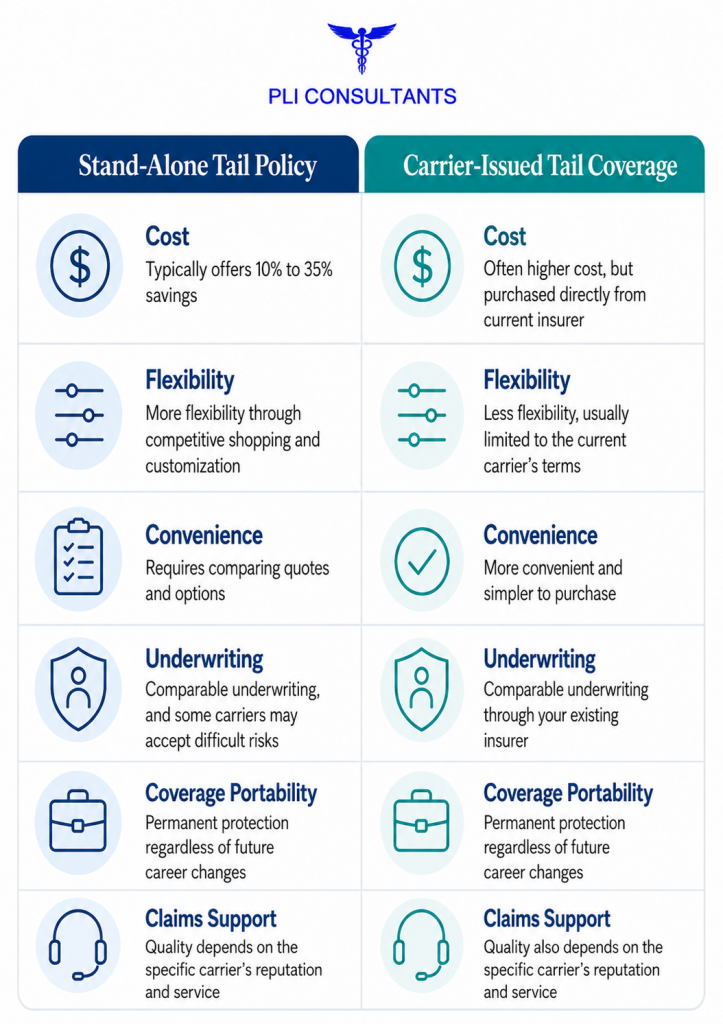
Independent carriers often offer quotes 10-35% below carrier-issued alternatives. PLI Consultants compares multiple A-rated carriers to secure competitive rates without sacrificing quality.
Greater Flexibility.
Standalone policies offer customization unavailable with carrier-issued options. Compare policy structures, payment options, and coverage enhancements. Some carriers offer installment plans instead of full upfront payment.
Financial Predictability.
One premium payment provides permanent, unlimited reporting protection. No renewals, increases, or cancellations—straightforward budgeting for retirement or career changes.
Access to Specialized Experts
Specialized brokers understand retroactive dates, claims-made complexities, and state requirements, helping physicians avoid pitfalls like incorrect dates or inadequate limits.
Continuity of Protection
Properly structured tail insurance ensures seamless protection for high-risk specialties like surgery, obstetrics, and neurosurgery, where claims can surface years later.
The Potential Disadvantages of Stand-Alone Tail Insurance
Upfront Cost Can Still Be Expensive
Tail coverage typically costs 200% of your annual premium as a one-time lump sum. High-risk specialists face multipliers of 200-300% or more—general surgeons may pay over $150,000, while OB-GYNs and neurosurgeons often face $50,000 to $100,000+. Budget accordingly and explore payment plans or employer cost-sharing arrangements.
Source: https://www.pliconsultants.com/specialties/general-surgeons-medical-malpractice-insurance
https://www.pliconsultants.com/specialties/ob-gyns-medical-malpractice-insurance/
Coverage Terms Must Be Carefully Reviewed
Not all standalone tail policies offer identical protection. Critical elements include retroactive dates matching your original coverage, exclusions, consent-to-settle clauses, and policy limits. Specialized brokers ensure these technical details align correctly.
Not Every Physician Qualifies
Underwriting considers claims history, specialty risk, and state factors. Physicians with multiple prior claims or high-risk specialties may face limited carrier options, higher premiums, or declinations, making carrier-issued tail the only option in some cases.
Limited Carrier Availability in Certain States
High-litigation states like Florida and New York have fewer competing carriers, potentially reducing cost savings. However, specialized brokers with multiple carrier relationships can often still secure competitive quotes in challenging jurisdictions.
Stand-Alone Tail Policy vs Carrier-Issued Tail Coverage
Who Should Consider a Stand-Alone Tail Policy?
Stand alone tail coverage makes the most financial sense for physicians changing jobs without employer-provided tail coverage, dentists and surgeons in private practice facing retirement, independent contractors transitioning between engagements, retiring healthcare professionals seeking permanent protection, and telemedicine providers ending claims-made policies. The potential cost savings and coverage flexibility make exploring stand-alone options worthwhile before accepting carrier quotes.
How to Reduce the Cost of Tail Coverage
Several strategies help minimize medical malpractice tail coverage expenses. Compare multiple quotes from different carriers through specialized brokers rather than accepting the first offer. Explore stand alone tail policy options early in your transition planning, as rushed purchases limit negotiation leverage. Negotiate employer tail coverage responsibilities during contract discussions; many employers will cover tail costs as part of separation agreements. Understand free tail eligibility, as some carriers offer complimentary tail coverage after maintaining policies for specified periods. Maintain a clean claims history, as underwriting significantly favors physicians with minimal prior claims.
Common Mistakes Physicians Make With Tail Coverage

Waiting until the last minute – Loses negotiation leverage and comparison options
Assuming employer pays – Verify in writing or face unexpected six-figure bills
Ignoring retroactive dates – Creates coverage gaps leaving you personally liable
Choosing price over protection – Cheap policies often have inadequate limits or weak carriers
Skipping policy exclusions – Unreviewed fine print can leave critical procedures unprotected
How PLI Consultants Helps Physicians Compare Stand Alone Tail Policies
PLI Consultants specializes in helping physicians navigate stand alone tail insurance options across multiple A-rated carriers. Our experience with claims-made policy transitions enables us to identify potential coverage gaps and ensure proper retroactive date alignment. Physicians working with PLI Consultants typically achieve savings of 10% to 35% compared to carrier-issued tail quotes. We serve physicians throughout Florida, Georgia, and Tennessee, providing simplified quote comparison and expert guidance through the entire purchasing process.
Final Thoughts
Stand alone tail policies offer physicians meaningful cost savings and greater flexibility compared to carrier-issued alternatives. However, every physician’s situation differs based on specialty, claims history, state regulations, and career circumstances. The importance of thoroughly reviewing coverage details, understanding retroactive dates, and confirming policy limits cannot be overstated.
Rather than rushing into tail coverage purchases during stressful career transitions, physicians benefit from early planning and expert guidance. Taking time to compare medical malpractice tail coverage options ensures you secure optimal protection at competitive rates. Whether changing jobs, retiring, or switching carriers, informed decision-making protects both your financial security and professional reputation for years to come.